Decoding the "Pollen Bearing Plant Part" Crossword Clue: The Definitive Answer
For many crossword enthusiasts, the clue "Pollen Bearing Plant Part" is a familiar sight. It's one of those classic botanical questions that pops up repeatedly, testing not just your vocabulary, but also your understanding of basic plant anatomy. If you've ever found yourself pondering the answer, you're in good company. The definitive solution, almost without exception, is STAMEN.
This seemingly simple, six-letter word unlocks a world of botanical wonder. But why is the stamen so consistently the correct answer to this pollen-producing plant part crossword clue? It's because the stamen is precisely that: the male reproductive organ of a flower, responsible for producing and containing the crucial pollen grains. Crosswords, while entertaining, often serve as mini-educational tools, reinforcing knowledge across various fields, and botany is no exception. Understanding the stamen isn't just about winning a word game; it's about grasping a fundamental aspect of life on Earth.
The beauty of such a clue lies in its directness. When a crossword asks for a "Pollen Bearing Plant Part," it's pointing you directly to the source of pollen within a flower. No other single plant part fulfills this specific role in the same way. While petals attract pollinators and sepals protect the bud, it's the stamen that holds the key to fertilization and, ultimately, the perpetuation of plant species.
The Stamen Unveiled: Anatomy and Its Reproductive Role
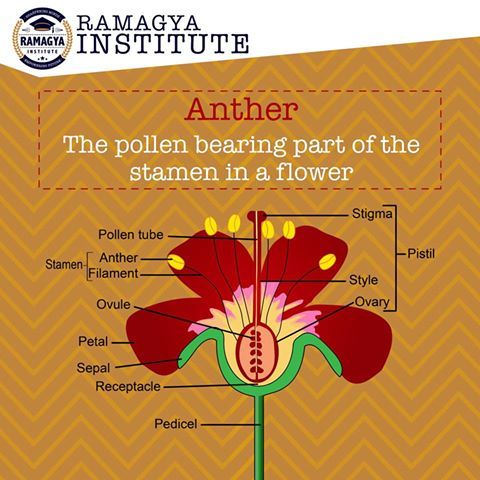
To truly appreciate why the stamen is the ultimate answer to the "Pollen Bearing Plant Part Crossword Clue," we need to delve into its structure and function. The stamen, a critical component of a flower's reproductive system, is typically composed of two primary parts:
- The Filament: This is usually a slender, stalk-like structure that supports the anther. Its main purpose is to position the anther optimally for pollen dispersal, whether that's by wind, water, or visiting pollinators. The length and rigidity of the filament can vary significantly among different plant species, influencing how easily pollen can be accessed or released.
- The Anther: Perched atop the filament, the anther is the star of the show when it comes to pollen production. It's typically a bilobed (two-lobed) structure, with each lobe containing two pollen sacs or microsporangia. Within these sacs, microscopic pollen grains are formed through a complex process called microsporogenesis. Once mature, these pollen sacs will dehisce (split open) to release the pollen.
Together, the filament and anther form the stamen, the male reproductive organ of the flower. Its primary function is the production and release of pollen, which carries the male genetic material needed for fertilization. When pollen is transferred to the stigma (the receptive tip of the carpel, the female reproductive organ), the process of pollination begins, potentially leading to fertilization, seed development, and the continuation of the plant's life cycle. Without the stamen, and its ability to bear pollen, the vast majority of flowering plants would be unable to reproduce sexually, highlighting its indispensable role in the botanical world.
Beyond the Crossword: The Vital Role of Pollen
While the stamen is the producer, pollen is the product – and what an important product it is! These tiny, often microscopic grains represent the male gametophytes of seed plants. Far from just being a nuisance for allergy sufferers, pollen is fundamental to the survival and diversity of plant life, and by extension, to countless ecosystems across the globe.
The journey of pollen from the stamen to the stigma is known as pollination. This process is the initial step in sexual reproduction for flowering plants and conifers, leading to the formation of seeds and fruits. Without successful pollination, many of the foods we eat – from apples and almonds to tomatoes and coffee – simply wouldn't exist. Pollen facilitates genetic recombination, ensuring diversity within plant populations, which is crucial for adaptation to changing environments and resistance to diseases.
Furthermore, pollen itself is a vital food source. It's packed with protein, fats, vitamins, and minerals, making it an essential part of the diet for many insects, including bees, which collect it to feed their larvae. The intricate relationship between plants and their pollinators (bees, butterflies, birds, bats, and even wind and water) is a cornerstone of biodiversity. Threats to pollinators, such as habitat loss, pesticide use, and climate change, directly imperil the ability of plants to reproduce, creating a ripple effect throughout entire food webs. This is why understanding the "Pollen Bearing Plant Part Crossword Clue" and its answer, the stamen, is more than just a game; it's a gateway to appreciating one of nature's most critical processes. To crack the clue: Pollen-Producing Plant Part Answer Revealed truly means understanding its ecological significance.
Diversity in Stamens: A Look at Floral Variations
While the basic structure of a stamen (filament and anther) remains consistent, nature delights in its variations. The form, number, and arrangement of stamens within a flower can be incredibly diverse, reflecting different evolutionary strategies for successful pollination. This diversity is not merely aesthetic; it's functional, often tailored to specific pollinators or environmental conditions.
- Number of Stamens: Flowers can have a single stamen (e.g., some orchids) or hundreds (e.g., poppies, mimosas). The number is often characteristic of a plant family or genus, aiding in botanical identification.
- Length and Position: Stamens can be shorter than the pistil (female part), longer, or even of varying lengths within the same flower. Some stamens are "exserted" (protruding beyond the petals), making pollen more accessible, while others are "included" (enclosed within the flower).
- Fusion: Stamens can be free from each other, or they can be fused in various ways:
- Monadelphous: Filaments are fused into a single tube, with anthers remaining free (e.g., hibiscus).
- Diadelphous: Filaments are fused into two groups (e.g., most pea family flowers).
- Polyadelphous: Filaments are fused into more than two groups.
- Synantherous: Anthers are fused together, but filaments are free (e.g., sunflowers and other Asteraceae).
- Attachment to Petals: Stamens can be attached directly to the petals (epipetalous) or arise independently from the receptacle.
- Anther Dehiscence: The way anthers open to release pollen can also vary, from longitudinal slits to pores or valves.
These myriad adaptations ensure that pollen is presented effectively to the intended pollinator or dispersed efficiently by wind or water. For instance, wind-pollinated flowers often have long, dangling stamens that release copious amounts of lightweight pollen, while insect-pollinated flowers might have brightly colored anthers or specialized structures to deposit pollen directly onto a pollinator's body. Observing these fascinating variations adds another layer of appreciation to the answer "stamen" for the "Pollen Bearing Plant Part Crossword Clue."
Conclusion: The Stamen's Enduring Significance
From the satisfying "aha!" moment in solving a crossword puzzle to the profound understanding of nature's intricate systems, the stamen stands out as a plant part of immense significance. It is, without a doubt, the definitive answer to the "Pollen Bearing Plant Part Crossword Clue," a botanical fact ingrained in general knowledge. But its importance stretches far beyond mere word games. The stamen is the linchpin of plant reproduction, the male powerhouse that meticulously produces the pollen essential for fertilization, genetic diversity, and the perpetuation of countless plant species. Its variations across the plant kingdom speak to the incredible adaptability of life, optimizing the transfer of pollen for every conceivable scenario. So, the next time you encounter that familiar crossword clue, or simply observe a flower in bloom, take a moment to appreciate the humble yet mighty stamen – a tiny marvel driving the grand cycle of life on our planet.